
Why Weight Loss Makes the Orbital Bone More Visible
When someone loses weight quickly, fat tends to disappear fastest in areas with the thinnest skin and smallest fat pads. The upper face—especially around the eyes—is one of those areas. The forehead, eyelids, temples, and brow region rely on thin layers of soft tissue to create smooth contours. When those layers diminish suddenly, the underlying bone structure becomes much more noticeable.
1. The fat pads around the eyes shrink
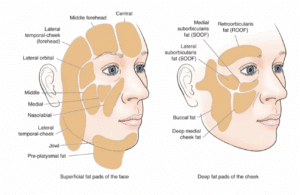
The upper face is shaped by several small fat pads that act like natural cushions under the skin. In the forehead, thin layers of fat help create a smooth transition from the hairline to the brows. Along the temples, soft fat pads fill in the space between the forehead and cheeks, keeping the sides of the face from looking hollow.
Around the eyes, tiny fat pads in both the upper and lower eyelids help support the eyelids and keep the eyes looking bright and well-rested. When we lose weight quickly—or as we age—these fat pads shrink. As they diminish, the orbital bone and brow ridge become more visible, and the eyes can look deeper, more shadowed, or tired because the natural padding that once softened the area is no longer there.
2. The brow bone becomes more apparent
Many people naturally have a mild brow ridge that they never noticed because soft tissue covered it. After rapid weight loss, the brow bone may project more clearly, creating:
- increased shadowing over the upper eyelids
a heavier or more tired appearance
stronger contrast between forehead and eyes
a harsher facial expression, especially in photos
3. Aging and weight loss amplify each other
Natural aging already causes the upper face to lose volume as the fat pads in the forehead, temples, and around the eyes slowly shrink over time. This leads to more visible bone structure, mild brow heaviness, and deeper shadows around the eyes. When rapid weight loss is added to the mix, these age-related changes become much more noticeable—and happen much faster.
The combination can make the orbital bone and brow ridge stand out sharply, create hollowing in the temples, and increase hooding over the eyes. What might normally develop over many years can suddenly appear within months, making the upper face look older, more tired, or more severe than before.
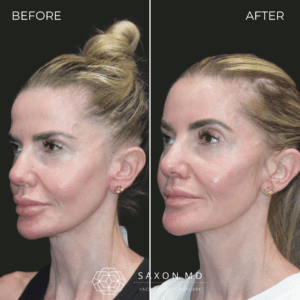
4. The upper face reveals weight loss fastest
Most people expect their mid-face or jawline to show weight loss first. But in reality, the upper third often transforms the earliest because the fat pads are thin and offer little buffering. That’s why the orbital bone, brow bone, and orbital rim may suddenly seem “new,” even though the bone was always there.
Why the Upper Face Matters So Much for Youthful Features
The upper face plays a huge role in conveying expression, approachability, and youthfulness. Even subtle changes can alter someone’s perceived mood. A heavy brow, a sharp orbital bone, or shadowing over the eyes can unintentionally communicate tiredness, sternness, or aging.
A smooth, gently curved forehead that transitions softly into the eyes allows light to enter the eyes freely, creating the bright, open look associated with vitality and youth. When the brow bone or orbital rim becomes prominent, it reduces the amount of natural light that reaches the eyes. This makes the eyes appear smaller, darker, or older.
This is why treatments for the upper face must address light and shadow, not just volume.

Why Some People Try Dermal Fillers First
Many people understandably turn to fillers when they notice the more defined contour of the orbital bone or the prominence of the brow bone after weight loss. They hope that adding volume will soften the appearance.
However, fillers in this area are not only ineffective for the underlying issue—they come with serious risks.
-Filler in the forehead and brow region can cause blindness
The blood vessels in the forehead connect to the vessels supplying the eye. If filler is inadvertently injected into one of these vessels, it can travel to the retina and cause instant, permanent blindness. Even highly skilled injectors consider the forehead and orbital rim area a high-risk zone.
Because the risks are so significant, fillers here must be approached with extreme caution—and even when safely injected, they are rarely the ideal solution.
-Filler does not correct hooding over the eyes
One of the most common complaints after weight loss is increased upper eyelid hooding or heaviness from brow ridge projection. Filler cannot lift the brow, reduce the orbital bone’s projection, or allow more light to reach the eyes. In fact, adding filler can sometimes make the area look heavier.
If the orbital bone or brow ridge is structurally strong, injecting filler simply adds more volume over bone, which can create a bulky, unnatural look.
The central goal of upper-face rejuvenation is to increase light in the eyes and reduce shadowing. Filler doesn’t accomplish this. It doesn’t change the contour of the orbital bone, nor the direction in which light falls on the eyes.
This is why more patients seeking long-term, natural, predictable results turn to surgical options that reshape the bone and restore balance to the upper face.
The Most Effective Solution: Combining Orbital Rim Reduction or Brow Bone Reduction with a Brow Lift
When the orbital bone and brow ridge become prominent after weight loss, correcting the issue at the structural level creates the most natural, harmonious result. Each procedure has its own benefits, but together they address the root causes of the heaviness, shadowing, and loss of brightness around the eyes.
Brow Bone Reduction
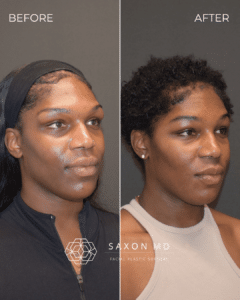
This is one of the most transformative procedures for someone dealing with a prominent brow ridge after weight loss. By reshaping the projecting portion of the frontal bone, the surgeon creates a smoother, softer contour.
What brow bone reduction accomplishes:
reduces the projection of the brow
eliminates harsh shadows over the eyes
allows more light to reach the eyes
creates a smoother transition from forehead to upper eyelids
restores a brighter appearance
Orbital Rim (Orbital Bone) Reduction
If the orbital bone appears deep, sharp, or shadowed after weight loss, orbital rim reduction softens and reshapes this bony margin.
Benefits include:
reduced depth of the eye socket
a smoother contour around the upper eye
less shadowing
a more open appearance
enhanced brightness
Even subtle orbital bone adjustment can make the eyes look significantly younger and more refreshed.
Brow Lift
A brow lift elevates descended or heavy brows into a more youthful position while allowing more light to reach the eyes—a key objective in treating orbital bone prominence.
A brow lift can:
reduce hooding over the upper eyelids
brighten the eyes by reducing shadowing
improve the overall expression
complement orbital bone and brow bone reduction
Why Combining These Procedures Creates the Best Outcome
While each procedure provides improvement, their synergy creates the most natural result. The orbital bone, brow ridge, forehead height, and brow position all affect the amount of light that reaches the eyes. Addressing all four produces a smooth, continuous harmony that cannot be achieved with filler.
This combination is ideal for someone who:
notices a prominent orbital bone or brow ridge after weight loss
feels the eyes look deeper or more shadowed
experiences upper eyelid hooding or heaviness
feels their facial expression looks harsher, older, or tired
wants to restore brightness and balance without risky filler
Restoring Light, Softness, and Balance to the Upper Face
Rapid weight loss—whether from lifestyle changes, medications, or aging—can be transformative. But it can also reveal unexpected changes, especially along the orbital bone and brow ridge. A prominent orbital rim or heavy brow can cause shadowing, deepening of the eyes, and a harsher expression that wasn’t there before.
The goal of treatment should always be to restore balance, increase how much light enters the eyes, and reduce shadowing—not simply add volume. That’s why structural refinement through brow bone reduction, orbital bone reduction, hairline lowering, and brow lifting delivers such a natural, lasting improvement.
If these changes have affected how you see yourself, know that solutions exist that can restore softness, brightness, and harmony to the upper face—without relying on risky filler techniques.
You May Also Like:
- The Best Surgical Options to Reduce a Big Forehead
- The Real Reason You Have Hooded Eyes (And What You Can Do About It)
- Avoid the Risk of Fillers: How Forehead Contouring Surgery Delivers Safer, Lasting Results
- Brow Bone Reduction for Women with Frontal Bossing: Is It Worth It?
- Potential Brow Bone Reduction Complications
- Brow Bone Reduction Before and After Gallery