
Ozempic Skin Changes: What New Research May Mean for Your Face
A small new study found about four times fewer stem cells in fat from patients taking GLP-1 medications. I want to walk you through what that may mean for your face, and how it’s already changing the way I plan surgery.
I’m Dr. Sarah Saxon, a double board-certified facial plastic surgeon in Austin, Texas. I see patients for deep plane facelifts and facial rejuvenation from all over the country. This is not another post about volume loss after weight loss. I’ve already written about Ozempic face and what happens around the eyes when facial fat disappears quickly. Here I want to talk about the skin itself, and a few papers that have surgeons starting a new conversation at our meetings.
Watch: Is Ozempic Changing Your Skin, Not Just Your Weight?
Why So Many Patients Are Asking About Their Skin
About 12% of adults in the United States, millions of people, are on a GLP-1 medication at this point. In my practice, I pretty much assume that almost all of my patients are on one, even if they’re microdosing.
So many people are coming in because of loose skin and loss of volume in the face, and minimally invasive treatments just aren’t enough. We’re talking about a deep plane facelift and neck lift, and often other procedures along with that, such as a brow lift or a lip lift, because it seems like overnight their skin has moved south.
This also coincides with a time of a lot of other changes. I usually see patients in their 40s and 50s when they’re thinking about a facelift. In that same window, many are going through perimenopause or menopause. The loss of estrogen, GLP-1 medications, and volume loss work together, and they can change the face in a dramatic way.
What the New Stem Cell Study Actually Found
I want to be clear that the studies coming out are very new. Some of them have very few subjects. A lot more information is needed before we have any definitive answers. I still think it’s worth starting this conversation now, because in real time this is affecting how I make recommendations in a consultation.
A study published this year in Dermatologic Surgery, by Firsowicz and colleagues, looked at only 10 tissue samples. The samples came from abdominal skin, not from the face. The researchers found a significantly lower number of stem cells in the fat of patients taking GLP-1s, compared with the same kind of tissue from people who weren’t. They also found a significant decrease in regenerative biomarkers, but no change in the fibroblast count. Fibroblasts are the cells that make collagen.
Fat contains stem cells. That’s one reason I love fat grafting in the face: it brings that stem cell quality with it. The fat underneath the skin and dermis also supports the structures above it, including hair follicles, collagen production, and possibly even estrogen stimulation. So a reduction in those stem cells could have real implications for how quickly skin ages.
We’re already losing collagen and elastin starting in our 20s. Skin has to keep regenerating both, or that process speeds up. We already know that loss of estrogen during perimenopause and menopause can speed it up, and so can UV light and smoking. In patients taking GLP-1s, the stem cell content in the fat that’s still there may have decreased as well, which could mean even faster aging on top of everything else.
Because there were so few subjects, we can’t draw definitive conclusions from this study. It shows a correlation, not causation. It’s a jumping-off point, not a final answer.
A Theory About the Fat Layer in Your Skin
A colleague of mine, Dr. Michael Somenek, recently published a paper trying to hypothesize what’s going on, so we have a guide for future studies. He talks about the dermal white adipose tissue layer in the skin, sometimes called dWAT. That’s the fat in the dermis and hypodermis that supports the skin’s accessory structures, like hair follicles.
He proposes that a decrease in that layer could mean a decrease in estrogen production and a change in inflammatory biomarkers. Those biomarker changes may be beneficial for other organs in the body, and less so for the skin.
A systematic review from 2025 already showed that significant volume depletion is a definite part of the rapid facial aging we see in people with significant, rapid weight loss. I cover that volume story more fully in my earlier post on Ozempic face. The question now is whether something is also happening to the quality of the skin itself.
What I See in Clinic
Do these findings line up with what I see almost every day? I would say yes.
The patients I see who have been on a GLP-1 receptor agonist usually have very thin skin. It’s very elastic. It’s lost its reflective quality. It may look dull in texture, and I often see deeper wrinkles than I would normally expect at their age. There’s usually significant volume loss on top of that.
How I Plan a Facelift for Patients on a GLP-1
For most of these patients, nonsurgical treatments aren’t really on the table as a standalone plan, unless we’re using them to prepare the skin for surgery.
I do feel that regenerative treatments like radiofrequency microneedling can help regenerate some of the dermal layer that’s been lost, as long as they aren’t done at deeper depths or higher energies. If you’re earlier in that process, you may also consider Sculptra or other biostimulatory products, as long as they’re done by the right hands. I haven’t seen those treatments pose an increased risk in a later facelift. I have seen severe scar tissue in patients who had these treatments done, maybe not in the best of hands. For the patients I’ve treated this way myself, it isn’t usually a problem, and it can sometimes keep them from needing surgery earlier than they otherwise would.
Even if you are having a facelift, I usually prepare the skin with radiofrequency microneedling or laser treatments, and you’ll need to continue those after surgery. The collagen and elastin loss I see in these patients is a little quicker than in others. I may also see a little more recoil of the skin, meaning a return of some laxity, earlier than I normally would.
I really focus on restoring volume during surgery as well. I pair facial fat transfer with almost all of my deep plane face and neck lifts, because the volume depletion can be very dramatic, especially in the temples, around the eyes, and in the midface.
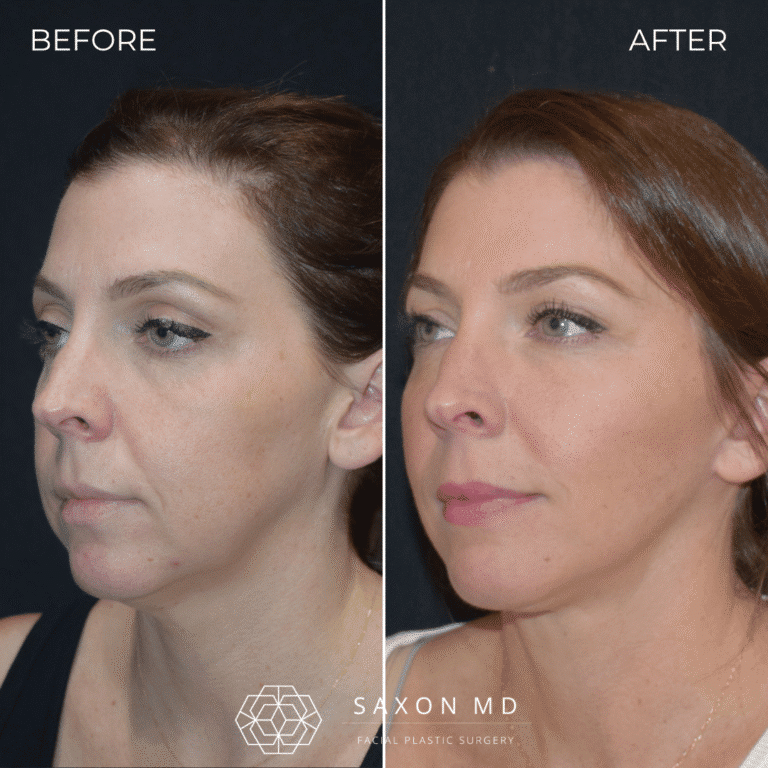
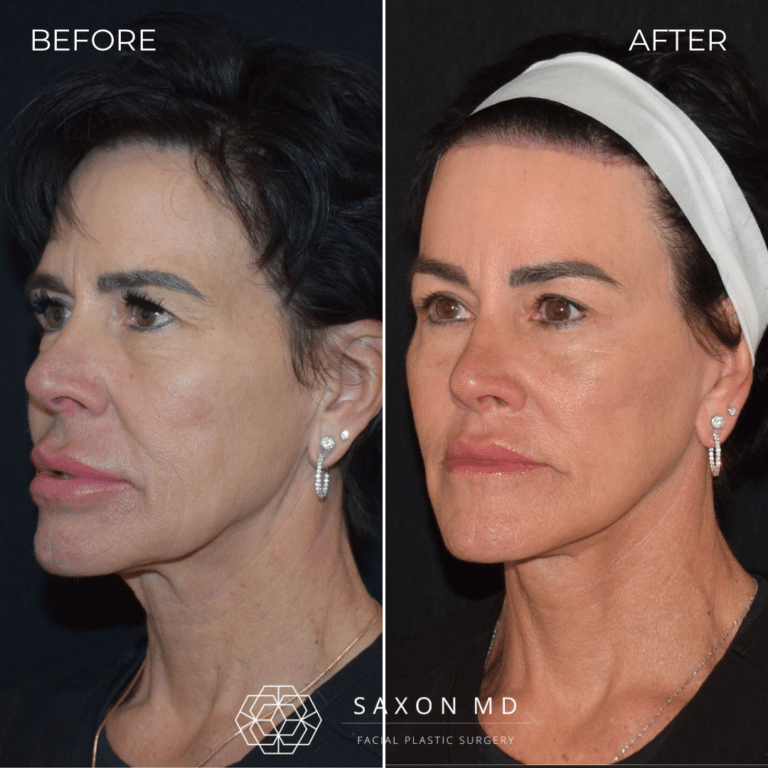
Sometimes, if I come across a herniated buccal fat pad, I’ll remove it, process it down as nanofat, and reinject it under the skin. When the skin is really thin on the neck, around the face, or around the mouth, I can inject that nanofat directly into the dermis, to try to support skin cells that have lost a lot of their structure over time.
Frequently Asked Questions
Does Ozempic damage your skin?
We don’t know that. One small 2026 study found fewer fat-derived stem cells in abdominal tissue from people taking GLP-1 medications, but it was a correlation in only 10 samples, and the tissue was not from the face. It cannot show that the medication itself harms facial skin.
Can I have a facelift if I’m on a GLP-1 medication?
Many people can, and I operate on patients who are on these medications. The plan is often a little different: I pay close attention to skin quality, I often prepare the skin beforehand, and I almost always restore volume with fat transfer. If you want to know how these medications factor into anesthesia planning, I cover that separately in when to stop tirzepatide before surgery. Those decisions should be made with your surgical team and the doctor who prescribed the medication. Please don’t change or stop a prescribed GLP-1 on your own because of anything you read about skin.
Will a facelift fix the skin changes I see after weight loss?
A deep plane facelift and neck lift can reposition tissue that has sagged. It doesn’t, on its own, rebuild skin quality. That’s why I often combine surgery with fat transfer, and why I use skin treatments before and after. Results and healing vary, and your plan should be built around your face, not a generic “Ozempic face” checklist.
GLP-1s have been transformative for many people, and we’re seeing so many patients get healthier than they ever have been. It’s an exciting time in healthcare. I just want you to be up to speed on the research that’s coming out, because it may affect how your face ages, and how we plan for it.
If you’re on a GLP-1 and you’re starting to notice changes in your skin, or you’re ready to talk about a facelift, my team in our Austin office can help you get set up with a consultation. We can walk through what your next steps actually are.
About the Author

Dr. Sarah Saxon is a double board-certified facial plastic surgeon in Austin, Texas. Her practice is limited to the face, with a focus on deep plane facelifts, facial rejuvenation and the changes she sees in patients after weight loss.
You May Also Like:
- Will I Need a Facelift After Taking Ozempic? Understanding “Ozempic Face”
- Ozempic Face and the Orbital Bone
- What Facial Plastic Surgeons Are Talking About in 2026
- Facial Fat Injections
- Facelift Before and After Gallery
References
- Firsowicz M, Kamrani P, Zubair R, Boen M, Dayan SH, Fabi SG. Cutaneous variations in stem-cell population in those on GLP1-receptor agonists: a comparative controlled study. Dermatol Surg. 2026;52(6S):S39-S44.
- Somenek M, Scher N. The impact of GLP-1 receptor agonist therapy on skin quality and health. SKIN J Cutan Med. 2026;10(5):3325-3335.
- Daneshgaran G, Shauly O, Gould DJ. “Ozempic face” in plastic surgery: a systematic review of the literature on GLP-1 receptor agonist mediated weight loss and analysis of public perceptions. Aesthet Surg J Open Forum. 2025;7:ojaf056.
This article is for general education and isn’t a substitute for a personal medical evaluation.
