
Hairline Lowering in Austin: Protecting Your Hair Through Recovery
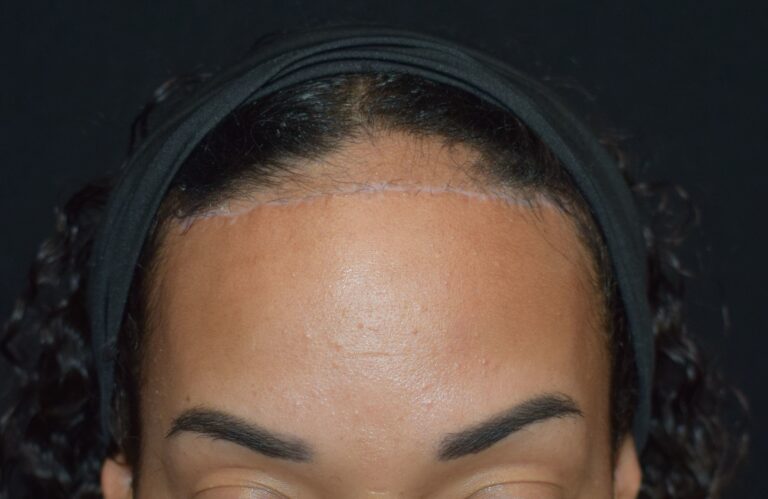
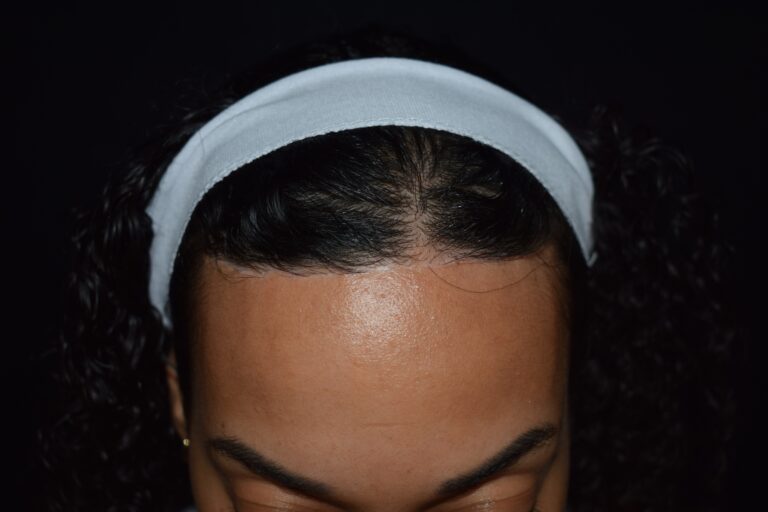
The scariest part of hairline lowering surgery is often not surgery day. For a lot of my patients, it’s about one to two months later, when they look in the mirror and notice the hair along the incision looks thinner than it did a few weeks before.
I’m Dr. Sarah Saxon, a double board-certified facial plastic surgeon in Austin, Texas, and hairline lowering is one of the procedures I focus on. That thinning is called shock hair loss, or telogen effluvium. If you want the basics of what it is and the general causes, start with Understanding Shock Hair Loss. In this post I want to focus on what is specific to hairline lowering: why the incision area sheds, the real-life stressors I see make it worse, and the specific things I do in surgery and recovery to protect your hair.
Watch: Hair Loss After Hairline Lowering Surgery? Shock Loss & Regrowth Explained
Shock Hair Loss After Hairline Lowering: The Short Version
The stress of surgery can push hairs that were going to shed anyway into shedding sooner. The follicles are not dead. They’re dormant for a while and need time to be reactivated.
Because I bevel the skin edge, cutting the incision at an angle, hair can eventually grow through the incision and help camouflage it. Around month two you may see the incision more than you’d like. Please don’t panic. In my patients, shedding usually starts in the first few weeks, I don’t usually see it get worse after about one to two months, and I judge the final result at one year.
Real Patients: When Life Adds More Shedding
Life doesn’t pause while you heal, and other stressors can add to the shedding. I had one patient who became pregnant shortly after surgery and had a lot of shedding. Once she got through that whole first-year process, all of that hair eventually grew back. Another patient lost a grandparent she was very close to, and that added stress on top of healing caused even more shedding.
Anything that can cause telogen effluvium on its own can add to shedding after hairline lowering. The ones I screen for most are:
- Rapid weight loss, like we see with GLP-1 medications
- Androgenic alopecia (pattern hair loss)
- Vitamin deficiencies
- Protein deficiencies
What Recent Research Adds About Shock Hair Loss and GLP-1 Medications
For the general basics of shock hair loss, see Understanding Shock Hair Loss. Here I want to share newer research that is specific to forehead and hairline surgery, and to GLP-1 weight loss medications, since so many patients ask me about them. These studies are useful, but none of them can predict exactly what will happen for you.
Shedding After Forehead and Hairline Surgery
- Forehead reduction surgery. A 2025 retrospective review of 650 forehead reduction patients treated by one surgeon in Brazil reported 98 cases of postoperative effluvium and 1 case of alopecia, with men having significantly fewer cases of effluvium (de Azevedo Marques, Aesthetic Plastic Surgery, 2025). It is a single-practice chart review, so it tells us shedding is a recognized part of this surgery, not what your personal risk is.
- Facial feminization surgery. A 2024 meeting abstract from a single U.S. health system reviewed 242 facial feminization patients and found postoperative telogen effluvium in 14 (about 5.8%). All 14 had forehead contouring, 11 had hairline advancement, and 12 of the 14 had documented regrowth, with the other 2 still waiting at last follow-up (Nguyen et al., ASPS meeting abstract, 2024). This has not been published as a full peer-reviewed paper, and the follow-up was short.
Both point the same way as what I see in practice: shedding after hairline and forehead surgery happens, and most of it grows back with time.
GLP-1 Medications and Hair Loss
- Clinical trials. The FDA label for Zepbound (tirzepatide) lists hair loss among the common side effects in its weight loss trials and states that hair loss in treated patients was associated with weight reduction. In the pooled trials it was reported more often in women (7.1%) than men (0.5%), compared with 1.3% and 0% of women and men on placebo, and no one on tirzepatide stopped the drug because of it (Zepbound prescribing information, FDA).
- Large health record studies. Several recent studies using the TriNetX database compared GLP-1 users with similar patients not on these drugs. One 2026 study found semaglutide and tirzepatide were linked to higher odds of nonscarring hair loss, especially telogen effluvium, and that patients with hair loss had lower follow-up BMI than those without, which the authors felt suggests weight loss stress may contribute (Katragadda et al., Laryngoscope, 2026). A 2025 study reported higher telogen effluvium risk with tirzepatide compared with other weight loss medications (Neubauer et al., JAAD, 2025).
- Adverse event reports. Analyses of the FDA’s voluntary adverse event reporting system have found alopecia reported more often than expected with semaglutide and tirzepatide (Godfrey et al., JEADV, 2024 online; Lee and Kim, Diabetes Metab Res Rev, 2026). These reports can flag a signal, but they can’t tell us how often hair loss happens or prove the drug caused it.
What we don’t know yet is just as important. These are associations, not proof that the medication itself damages hair, and researchers still can’t fully separate a drug effect from the effect of losing weight quickly. I also could not find any study looking specifically at shock hair loss after hairline lowering in people taking GLP-1 medications. That is why I want to know about GLP-1 use, recent weight loss, and nutrition at your pre-op visit. Please don’t stop or change any medication on your own; talk with me and the doctor who prescribes it.
Pre-Op Optimization and Hair Vitamins
At every patient’s pre-op appointment, I go through all of these factors to make sure you’re medically optimized before your procedure.
I’ll often put patients on hair supplementation too. One I like is Xtressé, a gummy hair vitamin, and there are several other brands that can work as well. I just find it’s a lot easier for people to take a gummy vitamin than a handful of big pills.
How I Protect Hair Follicles During Surgery
A lot of what helps your hair grow back, or keeps it from falling out in the first place, happens in the operating room.
Gentle Handling and Precise Cautery
I handle your skin very meticulously. I don’t want to crush the skin with my forceps, and I pay close attention to where the hair follicles are. The scalp is naturally very vascular, so I’m precise with cautery and treat only the blood vessels, not the surrounding follicles. Any kind of heat can permanently damage a hair follicle.
Interrupted, Long-Lasting Deep Sutures
Underneath the skin, I use interrupted sutures. That avoids strangulating the blood supply to the follicles and lets the blood supply keep regenerating around them. I also don’t want too much tension on the incision. The deeper sutures I place are PDS, which lasts several months through the initial phase of healing. In those first months, while the scar tissue isn’t as strong, the suture does the work. By the time the scar has matured and gotten stronger, the sutures dissolve. That also helps the scar stay narrow instead of widening.
Platelet-Rich Fibrin (PRF)
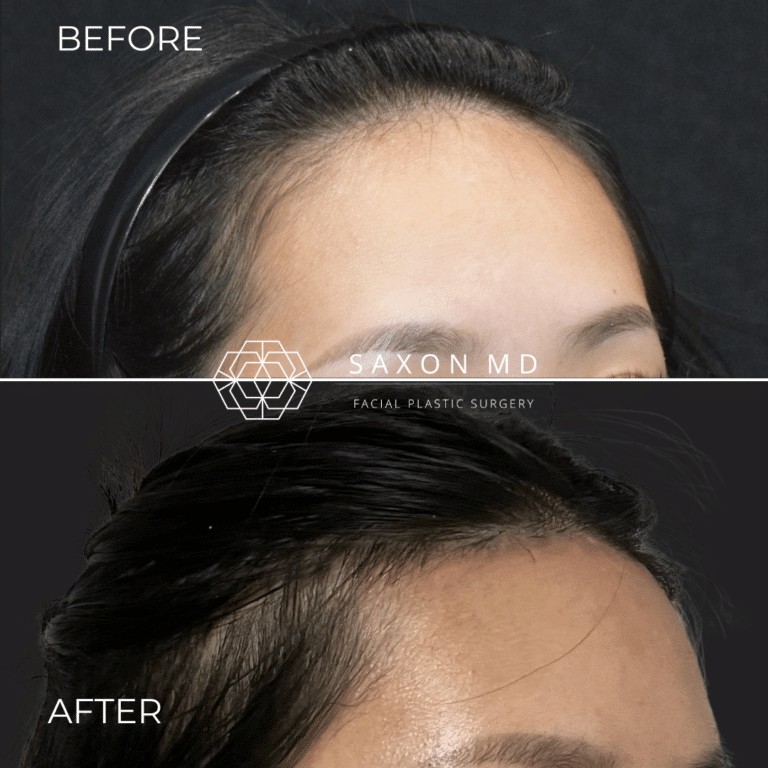
I usually use platelet-rich fibrin (PRF) during surgery. We draw a small amount of your blood, spin it in a centrifuge right in the operating room to extract your body’s own growth factors, and inject it into the incision. In my experience, incisions heal a lot faster, and the hair follicles seem more stable than what I saw before I started using PRF. I really love it.
Hairline Lowering Aftercare for Hair Regrowth
After surgery, my focus is keeping inflammation as low as possible.
- No ointments. I find ointments can trap dirt and debris around the incision, cause more inflammation, and make it heal worse.
- Keep scabs off. In the shower, use your fingertips and the gentle shampoo I give you to wash the incision well. When scabs don’t form, the incision is usually in a much better place to heal.
- Hypochlorous acid spray. I have patients use a hypochlorous acid spray called Puracyn to further reduce inflammation and help speed healing.
Hats, Headbands and Silicone Strips After Surgery
Friction can get in the way of new hair growing through the incision. I like silicone gel after hairline lowering, but silicone strips can cause a lot of friction in that area. If you use strips, use them for short periods, not all the time.
The same goes for hats, headbands, or any head covering. In short spurts, yes, cover the incision to run an errand, hop on a video call, or go to work. As soon as you get home, I like the incision open to the air so the hair follicles are free to grow through it.
For more styling ideas while you wait, see How to Camouflage Your Hairline Lowering Incision and 7 Hair Care Tips After Hairline Lowering Surgery.
Do You Need Hair Grafts After Shock Hair Loss?
Absolutely not, at least not right away. I recommend giving it time and waiting until at least the one-year mark to see how much hair actually grows back. You wouldn’t want another procedure that can cause more shedding when you may not need it in the first place.
There are situations where I know ahead of time that I can’t advance the hairline quite as far forward as we’d like, and in that case I’ll tell you before surgery whether I think you’ll need grafts. But if the question is only shock hair loss, I want everyone to wait for their final result before deciding. I compare the two procedures in Forehead Reduction vs. Hair Transplant.

FAQ
Should I use ointment on my hairline lowering incision?
I don’t recommend it. Ointments can trap dirt and debris around the incision and increase inflammation. Instead, I have you gently wash the incision with your fingertips so scabs don’t form.
Can I wear a hat or headband after hairline lowering?
Yes, in short spurts. Friction can slow hair growth through the incision, so take it off when you get home and let the incision breathe.
Should I get hair grafts if I have shock hair loss?
Not right away. I recommend waiting until at least the one-year mark, since another procedure can cause more shedding and you may not need it.
Shock hair loss is stressful enough on its own, and I don’t want that stress to cause even more hair loss. If you’re wondering whether you’re a good candidate for hairline lowering, or you just want to understand the whole healing process before you commit, come talk it through with me in Austin. I’m happy to walk you through every stage of recovery.

You May Also Like:
- Hairline Lowering Surgery in Austin, TX: Recovery Timeline
- Understanding Shock Hair Loss: Causes and Management
- 6 Factors That Determine Hair Growth After Hairline Lowering
- Forehead Reduction Surgery Gone Wrong: Cautionary Tales and Prevention
- Receding Hairline in Women: What Causes It and How to Treat It
References
- de Azevedo Marques P. Forehead Reduction Surgery: Outcomes and Complications of 650 Cases in a Multiracial Population. Aesthetic Plast Surg. 2025;49(18):5101-5110.
- Nguyen N, et al. Incidence and Outcomes of Postoperative Acute Telogen Effluvium After Facial Feminization Surgery. ASPS meeting abstract, 2024.
- Zepbound (tirzepatide) prescribing information. DailyMed, U.S. National Library of Medicine.
- Katragadda R, et al. Nonscarring Alopecia in Adults Treated With GLP-1s: A Propensity Score Matched TriNetX Cohort Study. Laryngoscope. 2026.
- Neubauer Z, et al. Increased risk of telogen effluvium with tirzepatide compared to other weight loss medications. J Am Acad Dermatol. 2025;93(6):1612-1614.
- Godfrey H, et al. Alopecia associated with the use of semaglutide and tirzepatide: FAERS disproportionality analysis 2022 to 2023. J Eur Acad Dermatol Venereol. 2025;39(2):e153-e154.
- Lee N, Kim Y. Not All GLP-1 Receptor Agonists Are Alike: Real-World Evidence of Differential Endocrine and Dermatologic Safety. Diabetes Metab Res Rev. 2026;42(4):e70163.
This article is for general education and isn’t a substitute for a personal medical evaluation.
