
So you’re nine months out from your facelift, and you still notice some numbness, a little tightness, maybe some lumpiness under the chin. Is that normal?
It’s one of the most common questions I hear in my Austin practice, and it almost always comes up long after the bruising is gone. Most of what you read about facelift recovery covers the first two weeks. But healing after a facelift lasts at least a year, and sometimes more. In my new video, I walk through the normal cadence of healing over that whole first year, plus the red flags that mean you should call your surgeon. This is the written version, so you can come back to it whenever something new shows up.
Your First Year at a Glance
- First few days: sutures, soreness, swelling and some numbness. Possibly a drain or netting.
- Weeks 1 to 2: the healing you’ve seen online. Your neck repair is still being protected, so no massage yet.
- Month 1: you look more like yourself, but you are still very much healing.
- Months 2 to 3: numbness around the ears and firmness under the chin are common.
- Months 3 to 6: the scar “sweet spot.” Incisions start to fade and any thinned hair near them starts growing through.
- 6 months to 1 year: things keep softening, fading and settling.
- 1 year: most of it has come and gone, and we talk about maintenance.
The First Few Days
Right after surgery, you’ll have sutures around the ear and under the chin. If you also had a brow lift, you’ll have some sutures in the scalp too. You may or may not have a drain, and you may or may not have hemostatic netting on the surface of the skin.
You might feel some soreness. You might have a degree of numbness, and the swelling can even limit how much you move your face for a while. All of that is expected. If you’re still deciding on surgery, my guides to facelift surgery in Austin and the deep plane facelift explain how the procedure itself is done.
Weeks 1 to 2
These first few weeks look like what you’ve probably seen online. This is what normal healing looks like at this stage: swelling, some soreness, numbness and fresh incisions.
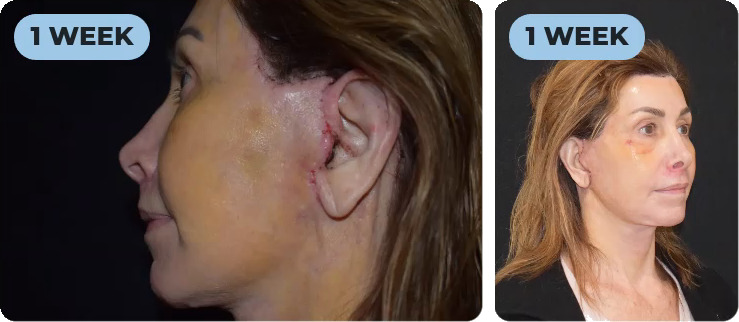
One thing patients are sometimes surprised by is that I usually don’t have you do lymphatic massage right at first. If I tightened the platysma, the neck muscle, I don’t want to do anything that could damage the sutures holding it in place. The lymphatic channels are also still regrowing, and I don’t want to cause a fluid collection. So for now, the goal is to protect the repair and let your body do its work.
For the practical side of these early weeks, my facelift recovery tips and my post on managing swelling after a facelift go into more detail. If you’d like to hear it from patients, Wendee and Deb talk through their own experience in this recovery conversation.
Month 1: Why You’re Not Done Yet
Once you get past the one-month mark, I find that people sometimes don’t really understand that they are still healing. You look more like yourself, friends may not be able to tell you had anything done, and it’s easy to assume the work is finished.

It isn’t. Real healing lasts at least a year, and sometimes more. Knowing that ahead of time makes the next few months a lot less stressful. You can read how one patient felt at this stage in Sandy’s five-week story.
Once you’re out of the window where I’m worried about fluid collections or hematomas, I’ll get you started on some light lymphatic massage. At some point, I may also have you use a gua sha stone to soften the area under the chin. I’ll tell you when you’ve reached that point. If you want to see the technique, here’s my post on how to perform gua sha lymphatic massage.
Months 2 to 3: Numbness and Firmness
This is often the stretch when you look great to everyone else, and your jaw still feels like it’s sitting in a chin strap. The swelling is mostly gone, but numbness and tightness can still be very much there. I’ve also heard from patients, including in conversations online, who were months out and felt no one had really explained that this part can last this long. I don’t want you to feel that way, so I talk about the whole first year before surgery, not just the first two weeks.
Numbness Around the Ears
In those first three months, I usually see quite a bit of numbness around the ear. Anytime you make an incision, even if you’re not cutting any of the main sensory nerves, you’re still cutting tiny nerve endings that go to the skin. That’s true of any surgery, anywhere on the body. Patients who have had a tummy tuck, for example, may have some numbness around that incision line even long term.
Your skin is full of those tiny sensory nerves. They’re what let you feel a light touch, a cold breeze, or your hair brushing your cheek. During a facelift, the skin and deeper tissue are lifted and repositioned, and many of those small branches are interrupted along the way. These are sensory nerves, which are different from the motor nerves that move your face. Numbness on its own doesn’t mean anything has gone wrong with your facial movement.
The face is very vascular, and for the most part, most people regenerate those nerves and gain full sensation. Sometimes that can take up to a year. I describe it to patients like the power coming back on after a storm. It doesn’t return to the whole neighborhood at once. One street lights up, then another. That’s why sensation often returns in patches, and why the area in front of the ears and along the jaw can lag behind.
As feeling comes back, many people notice tingling, itching, little zaps, or a crawling sensation. It’s annoying, but it’s usually a sign the nerves are waking up.
The Great Auricular Nerve
There is one sensory nerve in particular that can be injured during a facelift. It’s called the great auricular nerve, and it runs along the side of the neck. If you have numbness that lasts for years and simply doesn’t come back, for example earlobes that stay a little numb, you probably had some damage to that nerve.
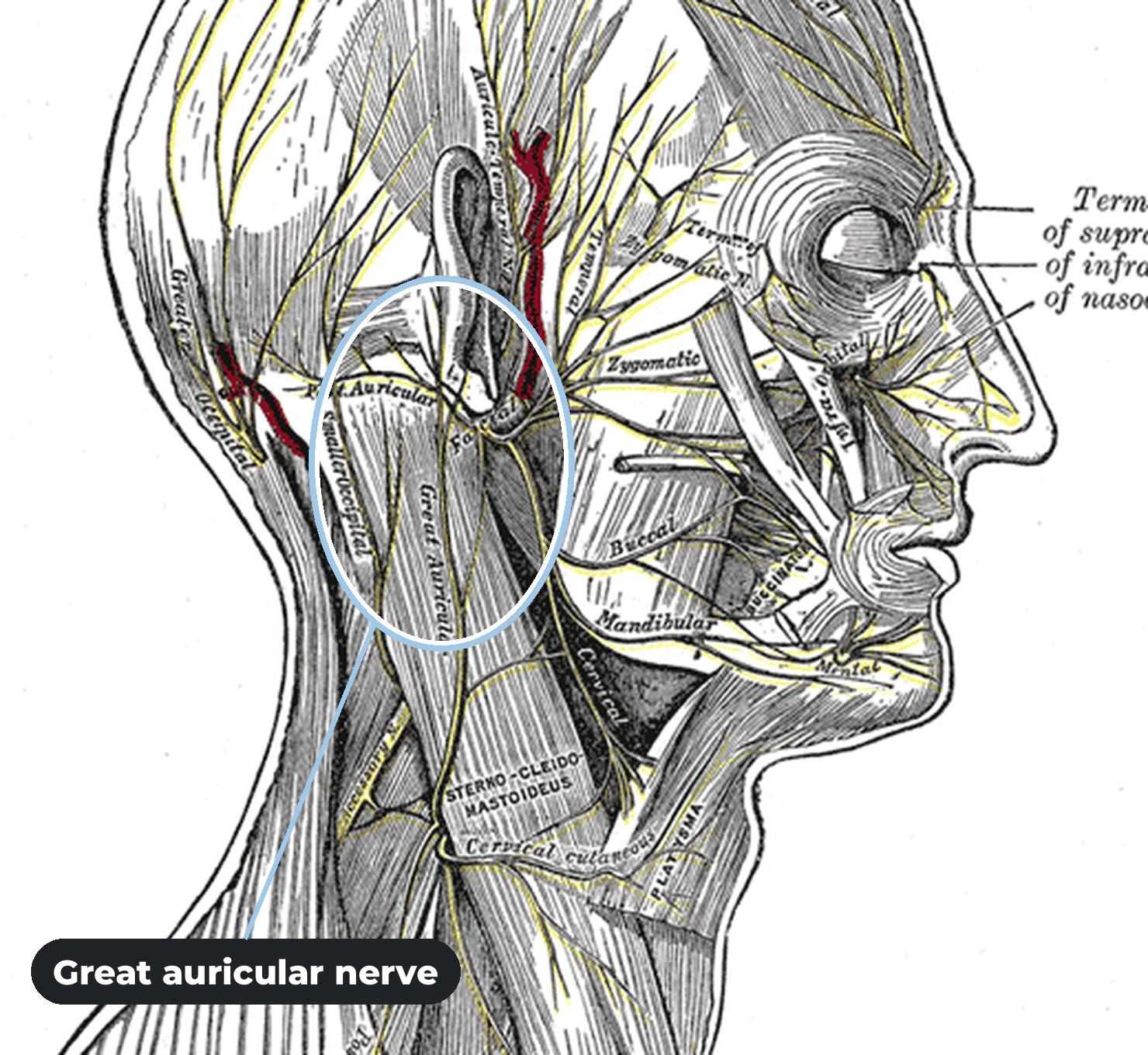
That’s not the same thing as a little numbness in and around the ear. That kind is something you notice if you really pay attention to it. Over time, your brain tends to minimize it, and it stops bothering you.
Firmness Under the Chin
The same thing can happen under the chin. You can have numbness there. And any muscle work I do in the neck can make the area feel very, very firm. That firmness takes time to go down too, several months at least, and the muscle can stay pretty tight for months and months.
Tightness also comes from healing underneath the skin. After a deep plane facelift, the tissues that were lifted have to heal in their new position. Your body lays down internal scar tissue to hold everything there. While that process is maturing, the area can feel firm, tight or slightly lumpy, especially under the jaw and around the ears. Over time, that internal scar softens and the tissue becomes more flexible. This is where the light lymphatic massage and gua sha help soften things. If neck bands are part of your story, I explain how I handle them in why neck bands come back after some neck lifts.
Months 3 to 6: The Sweet Spot
You might notice a little thinning of the hair right around your incisions. Around months three to six is when you’ll see some of those hairs start growing through.
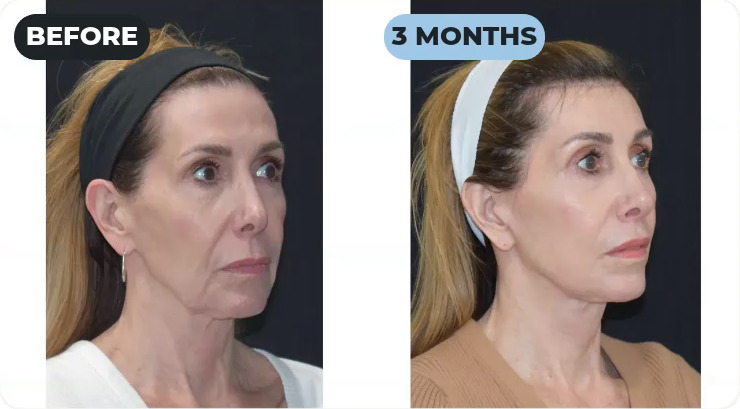
That’s also when I usually see the incisions start to fade. They’ll stay pink for several months. But around the three to six month mark, which I call the sweet spot, I start to see the incisions fade a little more over time, as long as you’re keeping sunscreen on them. Sunscreen on your incisions is one of the simplest things you can do during this stretch.
6 Months to 1 Year: Still Softening
By six months, a lot has improved, but you’re not at the finish line. It takes a whole year to see the full effect of scar fading. Lingering numbness around the ears and firmness under the chin can also keep improving through this stretch. For many patients, those last bits of numbness and tightness are the final things to resolve, and that can take the better part of a year. That’s why the patient at nine months with a little numbness is often right on schedule.
If something still bothers you at this point, bring it up at your follow-up visit. Sometimes it helps just to hear where you are in the timeline.
The One-Year Mark: Your Maintenance Phase
Usually, when I see you at the one-year mark, a lot of these things have come and gone, and you’re not feeling them anymore. Everything has softened up.
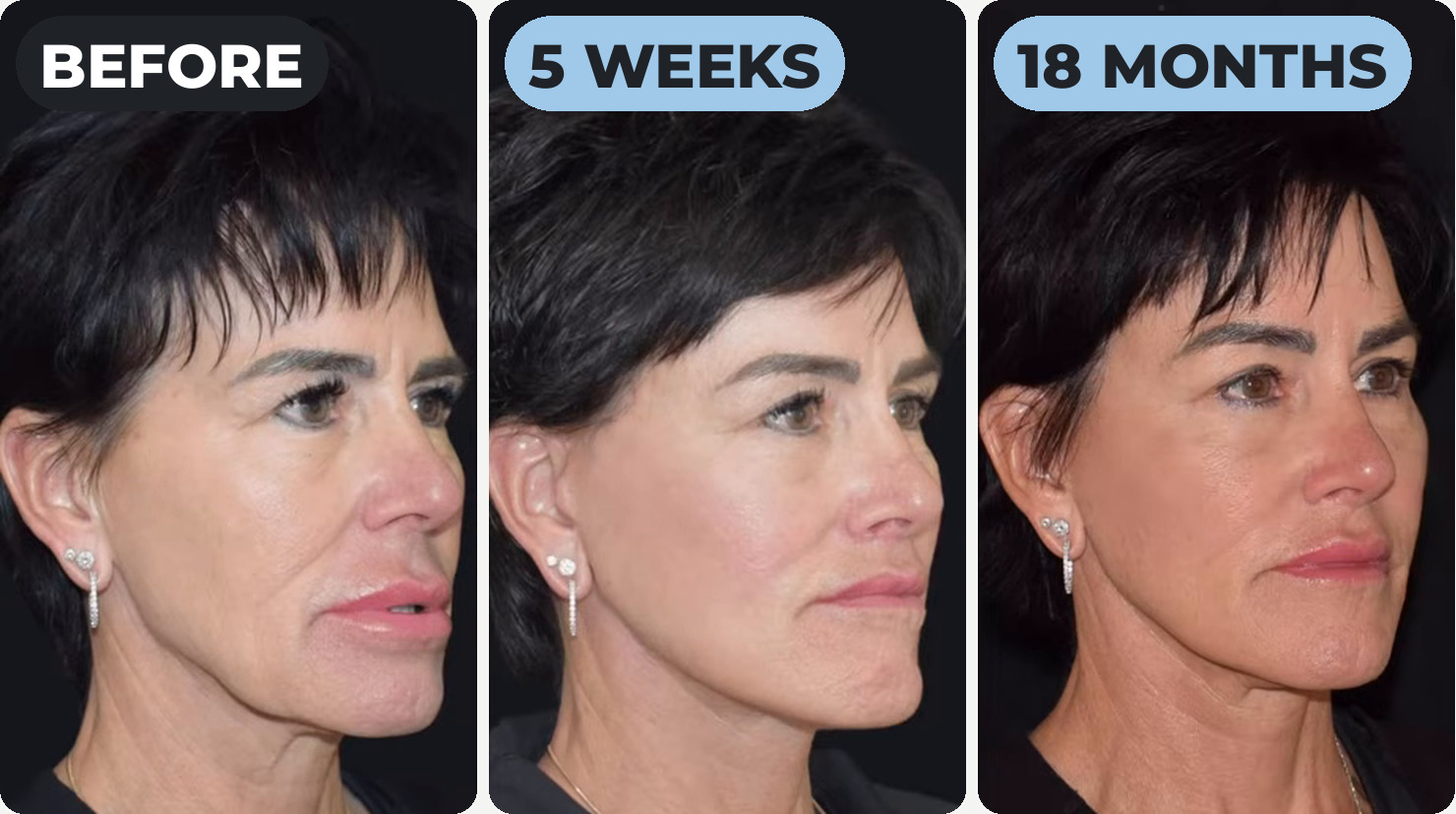
You might even see a little bit of recurrent skin laxity. That’s when we start to say, “Okay, now is your maintenance phase.” Treatments like radiofrequency microneedling such as Morpheus8, medical-grade skincare and laser resurfacing all play into the long-term outcome of your surgery. They help rebuild the skin, both before and after surgery, so your results can last longer. I go deeper into this in how to maintain facelift results and how long a deep plane facelift lasts.
If you’d like to see what healed results look like on real patients, my facelift and neck lift gallery is a good place to start. Every face heals on its own schedule, and results vary from person to person.
Red Flags After a Facelift
Most of what I’ve described above is normal. Gradual numbness and tightness are expected. These are the things that, if they happen in the first few months, mean you should definitely contact your surgeon:
- New, severe pain. Pain that is new and severe, or that’s getting worse instead of better, rather than the soreness that is slowly fading.
- Swelling that’s getting worse instead of better. That includes sudden swelling on one side. Either this or new severe pain can be a sign of a possible infection, so contact your surgeon as soon as possible.
- Redness, warmth, drainage or fever. These can also be signs of infection and deserve a call.
- A firm area that keeps growing. Some firmness is normal. A lump or firm area that continues to get bigger is not something to watch at home.
- New facial weakness that wasn’t there before. That includes a change in how you smile, close your eyes or raise your brows. It may or may not be related to your surgery, but your surgeon should know either way so they can follow you over time.
Some rare situations can still happen after surgery, like Bell’s palsy, which can be completely unrelated to the facelift itself. Surgery and the healing process put a lot of stress on your body, so other things can come up that may mean seeing another specialist. Even then, contact your surgeon first and let them know what’s going on. For a fuller look at surgical risk, see my post on potential facelift complications.
When to Call My Office
If you’re my patient and you notice new severe pain, swelling that keeps getting worse, redness or drainage, a firm area that keeps growing, or new weakness in your face, call my Austin office as soon as possible. You can find our contact information on the contact page. If you believe you’re having a medical emergency, call 911.
And if something just feels different from what you expected and it isn’t on this list, you can still call. That’s what we’re here for.
Frequently Asked Questions
Is it normal to still be numb months after a facelift?
Yes. Some numbness around the ears and under the chin is very common in the first few months. Most people regain full sensation, but it can take up to a year. Some people notice small patches that linger a year or longer.
Will numb earlobes go away after a facelift?
A little numbness around the ear usually improves, and your brain tends to tune it out over time. Numbness that lasts for years and doesn’t come back at all, especially in the earlobes, suggests the great auricular nerve was injured.
Is it normal for my jaw to feel tight months after a facelift?
Yes, it’s common. Tightness under the jaw and around the ears comes from internal healing, including scar tissue under the skin, and usually softens gradually with time.
Does numbness mean a nerve was damaged?
Numbness comes from small sensory nerves in the skin, which regrow over time. It’s different from weakness in facial movement, which involves motor nerves and should be reported to your surgeon right away.
Why does my neck feel hard after a facelift and neck lift?
Muscle work in the neck can make the area under the chin feel very firm. It takes several months at least to soften, and the muscle can stay tight for months and months.
Can I speed up getting my feeling back?
Time is the main factor. Following your surgeon’s aftercare, protecting numb skin from heat and sun, and avoiding smoking all support healing. There isn’t a shortcut I can honestly promise.
When can I start lymphatic massage after a facelift?
Not right away. I wait until you’re out of the window where I’m concerned about fluid collections or hematomas, then start light lymphatic massage, and sometimes gua sha later. Your own surgeon should tell you when you’re ready.
When do facelift scars fade?
Incisions usually stay pink for several months. Around three to six months, they start to fade, especially if you keep sunscreen on them. It takes a full year to see the complete effect.
Planning Your Facelift Recovery in Austin
I want you to be prepared, mentally and physically, for the whole healing process, not just the first two weeks. Age, skin, whether you had a neck lift or other procedures at the same time, and your own biology all play a role, so I’ll tell you where I expect you to be based on your own surgery. If you’ve had a facelift, I’d love to know what surprised you during your recovery. Leave a comment on the video, because I’d like to cover it in a future one.
If you’re considering a facelift or neck lift and want a starting point on cost, my price quote tool can give you an estimated range. Your exact plan, and your recovery timeline, are things we’ll talk through together at a consultation in my Austin office.
About the Author

Dr. Sarah Saxon is a double board-certified facial plastic surgeon in Austin, Texas. Her practice is focused on the face, including deep plane facelifts and neck lifts, and on preparing patients for every stage of recovery.
You May Also Like:
- Exercise After Facelift: When and How to Resume Normal Activity
- How Painful Is a Facelift?
- Structural Neck Lift
This article is for general education and isn’t a substitute for a personal medical evaluation. Results and recovery vary from person to person.
